Friday, June 18, 2021

The disconnect with your own self

I asked students in a class if they would spend a week alone without any cellphone etc, just themselves, nothing else, in a room (except food which they would also consume alone and bathroom breaks). 

Almost everyone said it would be almost impossible. Some even said that they might even kill themselves if they are forced to do that. 

This perhaps implies how much at war the youth maybe with themselves, so much that they are even haunted by their own existence, as if their existence is an unavoidable discomfort from which they need to keep themselves distracted. 

They have been perhaps taught to despise and reject parts of themselves, push them into their shadow, so much that they don't even know what they are, even scared of those parts. 

Any necessary personal change or personal accountability also become difficult with such disconnect, because of the counter resistance from the rejected parts. These rejected parts even get into conflict with others to vent out their frustrations caused by perpetual rejection. 

Self-awareness, self-understanding, self-acceptance, self-compassion is therefore fundamental here for not just being at peace with one self, but to grow and fruitfully hold one-self accountable when needed ...

Thursday, June 17, 2021

Emotional / mental health checklist

What does it mean to be emotionally/mentally healthy? A checklist based on my readings and exploration of the subject:

>Being consciously aware of the contents of the present moment including somatic awareness without a persistent urge to zone out

>To #mindfully feel the entire range of positive and negative emotions without the urge to repress them, or being self critical of any of them

>Capacity to notice and identify each emotion (emotional literacy)

>Ability to act on will on the demands of each emotions or emotional + somatic needs

>Knowing the limits of conscious controls (ego) and surrendering to autonomous systems of one's being

>Ability to hide if necessary yet feel the full force of emotions without suppressing them

>Ability to say no when needed, defending personal boundaries without guilt or shame 

>Being able to simultaneously feel conflicting emotions like grief and gratitude, fear and joy, anger and compassion 

>Ability to experience gratitude at will without suppressing grief if any ...

>Letting oneself to complete the grief and stress cycles when needed, finding space to do so at will

>Self acceptance, self compassion and ability to forgive oneself when needed, not being over confident let alone narcissistic,

>Feel guilt without shame after a mistake, or ability to accept mistake and correct oneself

>Easily able to defend oneself when falsely accused

>No urge to show-off for social acceptance or seeking approvals 

>Being aware and at peace with the contents of the shadow self

>Being aware of the core intentions

>Ability to listen and trust ones intuition

>Ability to form meaningful and healthy connections

>Being vulnerable and seeking any help when needed, knowing the apt company for this purpose

>Ability to identify potential abusers, manipulators, exploiters and avoid them

>Ability to see the unconscious projections, biases, prejudices, stereotypes which may distort, exaggerate or undermine the seriousness of a threat

>Being at peace with uncertainty, doubt, unanswered questions, without the urge to suppress any resulting stress or fear

>Being at peace with one self, while mindfully being aware of any internal conflicts

>Doing the right thing or avoiding the wrong not for social acceptability rather to honor ones conscience or uphold a moral principle 

>Ability to be empathetic and be compassionate to those who need it

The list is not exhaustive, additions are welcome in the comments below!

In a I think it's all about the balance between the need to be authentic to one's self and the need to connect to others ... 

Compromising ones authenticity for connection can lead to various psychological illness: depression, hypertension, stress and anxiety being the common ones ...

Conversely, manipulating others to submit to your authenticity, even using exploitation and abuse can turn you narcissistic or into a sociopath, which is also seriously problematic ...

Ignoring psychological needs

We have a culture of ignoring psychological needs, more so in the modern world ...

They are ignored so much that one even forget there are needs like completing the grief and stress cycles, being in a safe company when vulnerable etc.

Our nervous system gets overloaded and reacts (fight/flight/freeze) ... we then gaslight ourselves on being reactive because that's how we have been treated by others as well against such needs ...

We are gaslighted because reactions are also not socially acceptable (لوگ کیا کہیں گے) ۔۔

We are rather expected to practice alternative socially acceptable behaviors, but never address the root cause of our reactions.

We are expected to force ourselves into certain social norms, and even religious card is used for that matter even, despite religion originally has nothing against those ignored primal psychological needs, rather help in fulfilling those needs in many ways ...

Bureaucracy is always right!

You are severely punished in the education system for being wrong. Being wrong is so wrong that it defines if you can survive or not. You learn you cannot be wrong no matter what. You even learn to hide your flaws and mistakes and flaunt over your triumphs.

You get 20 something years of conditioning in the education system for avoiding being wrong.

After this conditioning when you join the private sector, market forces punish you for being wrong so it's not possible for the wrong to survive there ...

BUT if you join public sector, you now rarely get punishment for being wrong, but rather you can punish others for not obeying with your wrong designs. 

So, you don't correct yourself rather force the public into complying with your wrong ... it's time for some vengeance!!!

The anti encroachment drives and it's modus operandi, many of the lockdown measures since last one year or so are recent examples here ... 

There need to be a way for the public to punish the bureaucracy for being wrong.

There is also a dire need for the education system to be overhauled to teach people that it's alright to be wrong, but it's also necessary to correct their mistakes ...

How to be thankful during moments of pain?

Typically many of us distract or dissociate ourselves into a mental idea of gratitude to avoid the experience of pain to look tough or pretend to be alright or whatever...  

So instead, we need to view pain as an alarm system, like if you have a dog which disturbs your sleep by barking out loud to alert you in case some thief try to enter your house, you don't try to silence the dog rather appraise the dog for alerting you and take the action against the thief ... Same is the function of the pain in the body, it alerts us to take corrective action, its an alarm system which need not be shut down, it's a signal for us to respond to the disturbance in our system. The pain thus serves an important purpose, for which we need to be thankful ... 

There are no false alarms in our body, we just fail to understand the source of the pain, particularly emotional pain ...

Secondly, pain makes us ask for help, particularly from Allah s.w.t. We need to know the limits of our ability, for example, how much activity on a cellular level we can control in the healing process of a cut in our hand. Allah s.w.t designed this system of healing, and we need to give up to the system during the moments of pain, and be thankful for its autonomous activity to restore order in our bodies. 

The moment we realize the extent to which we can control the system to recover from the injury, its the moment when we move into the state of vulnerability. In this moment of vulnerability we can cry for help from Allah s.w.t., and be thankful for the opportunity for that purpose ... 

The sooner we notice pain and surrender to the process (after taking any action which we possibly can) the sooner the Divine system of healing can be activated ... while we wait for the Divine system to do its thing we can be thankful for the past experiences of healing, and be thankful for the outcome of healing in advance ... 

Thursday, June 10, 2021

Chronic Stress is perhaps an Invisible Elephant in the Room in the Fight Against COVID-19

It is now well established that a severe infection caused by covid-19 is a result of excess ‘cytokines’ produced by our immune system[1]. If the quantity of cytokines exceeds a certain threshold it can even turn deadly. Cytokines are a category of ‘messenger proteins’ which our immune system produce to fight off the infection. There are different types of cytokines which are produced, but if they are produced in access, they cause painful symptoms. Beyond a certain limit they can even turn against our us, leading to organ failure, clog our veins, and even deplete oxygen levels and nutrients in the blood. Jo Marchant writes in one of her books:

“Scientists used to assume that any damage done when we have an infection was caused by the infecting organism. Slowly they realized, however, that many of the symptoms we suffer when we’re ill — fever, weight loss, tissue damage, even fatigue and depression — are triggered not by pathogens but by our own immune systems, mediated by messenger proteins called cytokines … too-high levels of TNF [a type of cytokine] essentially activate every white blood cell in the body. These clog up blood vessels, blocking blood flow and starving cells downstream of oxygen and nutrients.”[2]

While reading Jo Marchant’s book ‘Cure’ (published in 2017), I learned that the knowledge about cytokines causing these terrible symptoms is known to scientists since a few decades now. A disease known as sepsis also have symptoms very similar to covid-19[3]. The Jo-Merchant’s book goes further to explain the treatments which have been developed to suppress the over reaction of the immune system. The one which raised my eyebrows attempts to suppress the immune reaction or cytokine production by stimulating the vagus nerve. This stimulation can also be done noninvasively.

This stimulation of vagus nerve leads to what is known as the ‘autonomic balance’. The autonomic balance is a balance between the two halves of our nervous system. One half is called the sympathetic part, which is responsible for generating a fight/flight response to a threat; while the other half known as the parasympathetic part is activated when we are calm.

The causal link between autonomic disbalance due to high degree of stress (the cause) and an over-reacting immune system is not a recent discovery, rather it is known to concerned scientists since over 80 years now. Hans Seyle[4] who coined the term ‘stress’ some 80 years ago has explained this relationship, and since then it has been extensively studied.

I learned about Hans Seyle’s work when I read Dr. Gabor Mate’s book ‘When the Body Says No’[5]. Like Jo Marchant, Mate’ has also explained in detail how high long term stress can cause our immune system to turn against our selves causing a variety of the autoimmune diseases. Autoimmune disease is a range of disease where the immune system turn against itself. The domain of psychoneuroimmunology has also been studying the link between autoimmune and the stress for a long time.

What really caught my attention was that if the balance between the two halves has been lost then we also become more susceptible to illness of sorts or other words our immune system goes an extra mile to knock us down; and restoring the balance between the two halves of the nervous system can also restore the balance of the immune response. The domain of psychoneuroimmunology has been studying this connection between the nervous system and immune system since more than half a century now[6].

While exploring more literature like the work of Gabor Mate’s and Robert Sapolsky, I learned that and It is well established in the domain of psychoneuroimmunology that if the nervous system has been disbalanced for too long, it also pushes the immune system to go haywire[7]. This disbalance between the sympathetic and parasympathetic parts of the nervous system is typically caused due to high long-term stress. So, if we are under high degree of stress for a long time (for months and years), the nervous system gets stuck in a disbalanced state, which in turn causes the immune system to overreact when we catch an infection. The immune system perhaps do not get the signal when to stop producing the cytokines so it keeps on producing them. The excess cytokines thus knocks us down[8].

A measure of this autonomic balance and disbalance is known as heart rate variability or HRV. There have been studies on covid-19 patients, showing that those who suffered a critical and even fatal infection of covid-19 had an autonomic disbalance just before getting infected with the noval coronavirus[9]. There also has been pilot studies which shows that noninvasively stimulating the vagus nerve (major part of the parasympathetic side) to bring the balance between the two halves of the nervous system suppresses the production of excess cytokines in severe covid-19 cases [10].

Now experts are acknowledging that the effects of covid-19 infection on the body can also be seen as an autoimmune disease[11], more so in patients if symptoms do not go away even after months[12]. However, it appears that the contemporary medical establishment is perhaps missing the link between the autonomic disbalance caused by long term stress as the potential culprit behind the dysregulated immune response against coronavirus which even turns deadly in some cases.

Luckily some scientists have studied the link between stress and covid-19 infection, and are suggesting that high-long term stress could be a possible culprit behind the lethal over reaction of the immune system[13]. The studies which have established the link between autonomic disbalance and severity of covid-19 in patients, and stimulation of the vagus nerve to suppress the immune response, may also imply that perhaps it’s the long term stress which is the primary culprit here. Dexamethasone which is now effectively been used to treat covid-19 patients also affect the production of cortisol, the infamous stress hormone in the system.

After reading Gabor Mate’, Jo Marchant, also Robert Spolskey and Jenna Macciochi, to understand the relationship between stress and disease including autoimmune, also looking at the work of experts which have now shown that the link between autonomic disbalance and dysregulated immune response, one may infer that it may be very likely that chronic stress is a key culprit here.

In this context one may critically evaluate the impact of lockdowns to prevent covid-19 as ironically the lockdown have added stress in the lives of so many people, or restricted the possibility of them getting out of stressful situations [14]. A study conducted by a team of researchers from University of Nottingham suggests that:

“the constellation of psychological risk factors identified in young people in this cohort (i.e. poorer mental health and increased loneliness) have been shown time and again to dysregulate the immune system and increase the risk of viral infections, including coronavirus infections. Thus, the psychological repercussions of lockdown may also have directly affected their immunological competence and ability to resist COVID-19 infection”[15]

The virus can attack everyone, but the people who are chronically stressed and thus have a disbalanced nervous system, are perhaps less likely to successfully defend themselves against the virus, while those who are able to successfully regulate their stress or maintain an autonomic balance are perhaps more successful in defending themselves not just from covid-19 but a wide range of deadly disease including autoimmune and cancer (not everyone agrees here) in the long run.

More studies are needed to clearly establish if there is a link between long term stress and a dysregulated response against the novel coronavirus; however, looking at the past research on the impact of stress on our immune system, it is perhaps plausible to infer that the presence of long term stress in our system rather helps coronavirus to do more damage to our bodies.

Continue reading here to learn about how to manage stress effectively click here ...  

References

[1] Hojyo, S., Uchida, M., Tanaka, K. et al. How COVID-19 induces cytokine storm with high mortality. Inflamm Regener 40, 37 (2020). https://doi.org/10.1186/s41232-020-00146-3

[2] Marchant, J. (2016). Cure: A Journey into the Science of Mind over Body. New York: Crown Publishers

[3] Baqi S, Naz A, Sayeed MA, Khan S, Ismail H, Kumar V, Somjimal H, Aneela J, Imtiaz S, Aftab S. Clinical Characteristics and Outcome of Patients With Severe COVID-19 Pneumonia at a Public Sector Hospital in Karachi, Pakistan. Cureus. 2021 Feb 3;13(2):e13107. doi: 10.7759/cureus.13107. PMID: 33728127; PMCID: PMC7935076.

[4] Selye, H. (1956). The stress of life. New York: McGraw-Hill.

[5] Maté, G. (2003). When the body says no: The cost of hidden stress. Toronto: A.A. Knopf Canada.

[6] Maté G. (2005). The science of psychoneuroimmunology. Canadian Family Physician, 51(4), 489.

Pert CB, Ruff MR, Weber RJ, Herkenham M. Neuropeptides and their receptors: a psychosomatic network. J Immunol. 1985 Aug;135(2 Suppl):820s-826s. PMID: 2989371.

[7] Sapolsky, R. M. (2004). Why zebras don’t get ulcers. New York: Times Books. Chicago

[8] Marchant, J. (2016). Cure: A Journey into the Science of Mind over Body. New York: Crown Publishers

[9] Leitzke, M., Stefanovic, D., Meyer, JJ. et al. Autonomic balance determines the severity of COVID-19 courses. Bioelectron Med 6, 22 (2020). https://doi.org/10.1186/s42234-020-00058-0

[10] Nemechek P (2020) Transcutaneous auricular vagus nerve stimulation holds potential to suppress COVID-19 cytokine storm. Int Clin Med 4: DOI: 10.15761/ICM.1000179.

Fudim, M., Qadri, Y.J., Ghadimi, K. et al. Implications for Neuromodulation Therapy to Control Inflammation and Related Organ Dysfunction in COVID-19. J. of Cardiovasc. Trans. Res. 13, 894–899 (2020). https://doi.org/10.1007/s12265-020-10031-6

Staats, P., Giannakopoulos, G., Blake, J., Liebler, E. and Levy, R.M. (2020), The Use of Non-invasive Vagus Nerve Stimulation to Treat Respiratory Symptoms Associated With COVID-19: A Theoretical Hypothesis and Early Clinical Experience. Neuromodulation: Technology at the Neural Interface, 23: 784–788. https://doi.org/10.1111/ner.13172

[11] iu, Y., Sawalha, A. H., & Lu, Q. (2021). COVID-19 and autoimmune diseases. Current Opinion in Rheumatology, 33(2).

[12] Galeotti, C., & Bayry, J. (2020). Autoimmune and inflammatory diseases following COVID-19. Nature reviews. Rheumatology, 16(8), 413–414. https://doi.org/10.1038/s41584-020-0448-7

[13] Parshley, Lois. (Sep 3, 2020), Could stress be another preexisting condition that makes Covid-19 infections worse? Website: https://www.vox.com/2020/9/3/21419902/covid-19-risk-factors-chronic-stress-racism-immune-system, Last accessed on 9th June 2021

[14] Bourdillon N, Yazdani S, Schmitt L, Millet GP (2020) Effects of COVID-19 lockdown on heart rate variability. PLoS ONE 15(11): e0242303. https://doi.org/10.1371/journal.pone.0242303

[15] Jia, R., Ayling, K., Chalder, T., Massey, A., Broadbent, E., Morling, J. R., Coupland, C., & Vedhara, K. (2020). Young people, mental health and COVID-19 infection: the canaries we put in the coal mine. Public health, 189, 158–161. https://doi.org/10.1016/j.puhe.2020.10.018 

Tuesday, June 8, 2021

Sectarian or ethnic violence as an externalization of a crisis in self-image

Jungian psychologists like Alice Miller and Lionel Corbett argue that the unconscious negativity we have for our own being is eventually projected onto others, if it is too much then it may turn into violence as well. It’s a kind of escape goat tactic played out by our ego as a defense mechanism. The ego finds it too hard to direct the violence toward oneself, and easier toward something or someone else as soon as it finds an excuse. 

Jungians argue that this externalization of hate and violence is at the root of ethnic and sectarian violence as well. A class of people who are economically improvised, not entertained well by the higher classes, may raise their children also while being under a lot of stress. The silent message ‘you are a burden’ maybe internalized for life by children being raised in such environments, despite the parents did their best in their limited capacity. The message is then reverberated by the society when such children grow up. 

Religion then comes to the rescue. A class of people which was otherwise rejected, is welcomed by religion. Religion thus can be a powerful transformative force to recover from a self-image crisis. But some religious demagogues use it to manipulate the insecurities of the improvised classes. The demagogues do not help transform the self-hate into self-respect, rather used the hate as a means to unite the disciples against an opponent. The hate rather is integrated into the identity of the disciple; ‘I hate therefore I am’. 

The demagogue may not be a popular religious figure, rather a secular politician who use this hate against an ethnic group. The opponents on both sides can keep projecting their internal hate onto the other, turning it into a vicious cycle. 

Often the state uses one group against the other to achieve some ends beyond the comprehension of the common public. Karachi for example has been a victim of such rivalries for many decades. When one or both opponents use religion to justify their projection of hate onto the other, it turns into sectarian violence. The recent violence in Lahore against the state and general public maybe evaluated in the same context.  

Since righteousness of one’s actions as a Muslim depends on the correctness of one’s intentions; therefore It is a critical moment of self-reflections for the initiators of violence of recent protests in Lahore to evaluate that if they turned violent against their fellow citizens who also adhere to the same faith, because they love Prophet s.a.w, or if they were projecting their internal animosities towards an opponent while using love for Prophet as an excuse to justify their projections. What if on the Day of Judgement, it turns out the loss of life and property they caused in the name of the love of Prophet s.a.w was an act carried out in pure selfish-interest to avoid the pain of self-hatred. There could have been many peaceful alternatives of staging protest or convey the pain caused by the insult to Prophet Muhammad s.a.w by some Frenchman.  

The reader might wonder, if the root of the conflicts as explained above is true, then how the self-hate may be cured. Again, the handiest tool available for the society is religion. Religion gives the message that all are acceptable in front of thy Lord, if they abstain from certain acts, be patient, and more so if they are poor then the rewards for their patience and steadfastness is many folds, while the affluence of the affluent class is a test against which one will be held accountable on the Day of Judgement. 

However, as Prophet s.a.w himself said that poverty can also take one towards apostasy, and it is easier for demagogues to exploit the poor, so any honest and unconditional poverty elevation initiatives or measures to advance socioeconomic justice by state or non-state actors, may help revive the self-respect of the pauper as well. Little wonder, why Dr. Muhammad Yunus, the founder of Grameen Bank, got a noble peace prize, instead of a noble prize of economics. In Pakistan also many interest free alternatives operating to elevate poverty, may also have a positive impact in transforming the self-image of a class of people, and eventually achieve a more peaceful society. 

Sunday, June 6, 2021

Refined Poison aka Sugar

Refined sugar is a slow poison, it can cause cancer, obesity, hypertension, blood pressure, inflammation leading to depression, is a neurotoxin etc. etc. there is a daily safe limit but since it is as addictive as cocaine, it is perhaps very hard to limit its qty ... 

I almost stopped consuming sugar and sugary stuff almost 2 years back (i still do but very occasionally), and I don't seems to have lost anything, perhaps gained in terms of the health benefits of avoiding a toxin (the scientific literature is easy to find on the internet) ... 

The argument that poor people get some of their daily calorie requirement met through sugar do not account for the health implications which makes the poor much more vulnerable, they should rather save their money now, save their health and save the money which they may have to spend if they develop a health condition with its persistent use, rather many of them unfortunately beg around for money for this purpose ... 

We need to raise awareness like we do against narcotics ... 

The Colonial Hangover

We live in a post-colonial world, have we even gotten over with the colonial hangover? Not just from our psyches, but also from our collective lives, also from the institutional framework we follow? 

We live in a world which still uses a system designed to manage the colonies. We were ruled directly before, and now by proxy yet effectively by the same masters. 

Our education system still produce people to keep the same system running, and we feel bad when we find out that a part of the population is not able to get the very education which ensures that our individual and collective lives, and institutions should keep running the way our colonial masters intended to ...

I am even writing this post in English, what's the word for colonialism or post-colonialsim in Urdu, maybe I know it, but how many times it is used in conversations, in media, by intellectuals to highlight anything?

There were effectively three nations at the time of partition, we parted from one, but the partition from the second one never happened, we don't even know what it would be like, how frequently we talk about this?

We perhaps live with an illusion of freedom, and perhaps are so hopelessly dependent on it that even the idea of getting ourselves free from the contemporary system may sound nonsensical to most around. It's rather fundamental to our survival in the contemporary world. 

We can't break free, so we should also know what can't be done in this system. We can't do much to free Palestine, Kashmir ... wasn't Yemen also under occupation? Let's leave it for some other time. Just raise a little voice, do a little protest, slap ourselves in the faces, that's it ... 

The govt. can't even sell electricity at a price it wants to, don't even talk about eliminating interest from the banking system, let alone eliminating the banking system in the first place, and after SBP given it's autonomy, the army I believe can't even fire a bullet without the permission of their masters (IMF etc.) ... and we talk about freeing a people from a tyranny thousands of miles away ... 

Sunday, December 22, 2019

Superheros of the Hidden Battles

By Khurram Khalili

He Woke up early in the morning, took a shower, had breakfast, dressed up and left for work. At workplace, performed the assigned tasks along with interacting and socializing with colleagues in a friendly manner. Came back to home after spending the entire day of hard work but still managed to keep a smile on his face for the ones waiting for him at home, spent some time with them, had dinner and went to bed for sleep. Seems to be the kind of day which is well spent by him with an ease.

What if I told you that his entire day was full of battles, the battles which no one has a hint of, but only himself. Here, the question arises, who is HE? HE is a superhero, yes you read that right, a superhero with great superpowers, a superhero who knows how to fight with inner demons, who knows that it is perfectly okay to go through mental hardships, who knows that he is not alone as everyone in this world is going through something which disturbs them mentally, something like an evil force which tries to drain out all the positivity from their inner self. But he knows that this is the point where the life is offering him an adventure to pursue, an adventure to fight against evil, against all odds and emerge as a hero, a hero who can inspire many others to become heroes.

Mental Health Issues in Pakistan are increasing with an alarming pace. Around 14 million people in Pakistan are suffering from mental health issues. Mental health issue is the most neglected area that needs to be discussed on a frequent basis. Most common mental disorders include depression, schizophrenia and epilepsy. The primary reason why these mental disorders attain severity with the passage of time is the silence of people going though them. However, it is not their fault either. The main culprit here is the norm of our society which restricts them to speak up, as if they will speak up about their mental insecurities the world will begin to judge them or will tag them as mentally unfit or retards.

So why not together we create a culture of accepting that each one of us is going through something in our lives which keeps challenging us mentally in some way or the other. But from now on why shouldn’t we treat such mental challenges as adventures i.e. the adventures with endless opportunities, the opportunities to become heroes, the heroes who never give up, who fight till the end and emerge victorious. Lets create a culture of openly and expressively talking about our mental insecurities and how we are battling against them, how we are putting up a fight each and every day against them and how we are keep winning small battles against them each and every day i.e. from waking up from bed despite of all the negative forces that resist us to leave the bed to coming back to bed at night after successfully seeing through all the hardships of the day with the smile on our face and also with the support of our loved ones, the supporting heroes.

All of us need to play two roles in our lives i.e. the role of a hero in our life and the role of a supporting hero in the life of others, for those we care about and love them. It is commonly said that not all superheroes wear cape, rightly said. But, in addition, I would like to say that not all superpowers can be seen, some can only be felt, and fighting with your inner demons i.e. with your mental disorders is one of those superpowers because our brain is the most powerful organ of the human body and conquering it is not less than a superpower.

So let’s begin fighting today, but the first step towards the progress is the acceptance. It is important that first we accept that we are not okay, and then accept that it is perfectly okay not to feel okay sometimes. It is okay to feel anxious at times, it is okay to feel depressed, it is okay to feel sad, it is okay to feel scared, it is okay to feel shy and it is okay to feel whatever you are going through at that moment. Because only after acceptance, we can advance towards the stage of betterment i.e. the stage of improving ourselves by fighting the inner battles going inside our head.

And while fighting battles, it is also okay to seek help of others i.e. the help of your family, your loved ones or an expert in mental health issues as there is a certain reason why there are always supporting heroes in the story of a hero. But remember, it is always a hero who turns the fortune in his or her favor in the end, so will you do in your story as well, and in case you don’t, then remember, my dear, it is not the end. Fighting mental disorders is not easy, but you too, were never meant to be born for easy.

You were born to do wonders and wonders, my dear, require the best version of yourself, the version of a superhero with the strongest superpower in the world - the superpower of fighting the hidden battles of mind. 

Friday, September 20, 2019

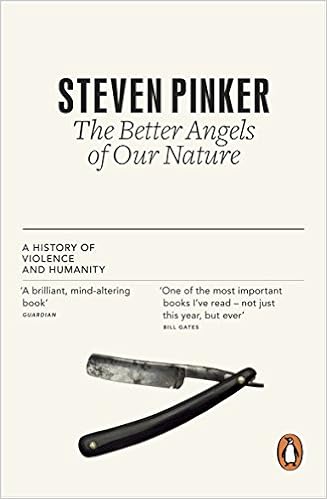
Short Review and Comments on Steve Pinker's The Better Angles of our Nature

Image result for steven pinker angels of our nature
By Dr. Omar Javaid

Steve Pinker in his behemoth 800+ pages book The Better Angles of our Nature totally misses the point. Pinker use cherry picked statistical data from across history to make the point that we are now living in significantly more peaceful times. He also never explained how archaeologists calculated the population from ancient times and how their population estimate are accurate. While he spent lots of time explaining how archaeologists found out the number of homicides or deaths along with their causes. The Data, is also very much Eurocentric, so it excludes the experience of the eastern part of the world.

A part from the data being biased, Pinker fails to address perhaps a more important point! Are we happier during these peaceful times? Yuval Noah Harari, a best selling author, historian, for example, would rather respond in negation. Harari believes that we might be living in materially well-off or perhaps peaceful times, but our subjective well being is worse than the people who lived before us though in difficult time but who at least had a meaning in their lives.

Finland for example is ranked as the happiest country in the world by UN, Nordic countries are also considered happier then the rest of the world, also perhaps more peaceful in comparison. However, more people commit suicide in Nordin countries then in many other parts of the so called underdeveloped world. Suicide rate of Finland for example is 6 times that of Pakistan as a percentage of population.

The percentage of millennials and generation Z in Finland who are suffering from a clinically depressed is significantly higher also as compare to those countries who are considered to be less happier as per the scales of UN. Will Storr argues that if anti-depressant drugs would not have been invented, the percentage of suicide would have been many times higher than it is today particularly in the so called first world.

So the ultimate Question which Pinker should have focused rather is that are we living a more meaningful or happier life these days? Is there a statistical data to confirm that our state of subjective well-being is better as compare to that of our Ancestors? The point here is not to justify violence, that violent times are better because we feel better during violent times. The act of violence in fact has nothing to do with out sense of subjective well-being, it is rather our sense of meaningfulness and internal contentment that we experience.

In fact our life become meaningful when we aspire for goals higher then our own selves (see Victor Frankl for details). When we strive to improve the lives of others around us. And if we have a framework to make sense of our extra-rational (generally referred to as irrational) dimension of our internal experience which includes our emotions, dreams, intuition etc (see Carl Jung for details).

Harari believes that we were better at making sense of our extra-rational inclinations while connecting it with a sense of meaningfulness. We had a purpose, a worldview, a narrative, which connected everything into a single whole. That narrative could have been a fairy-tale, but was rational in every meaning of the word in view of Nassim Nicholas Talib. Talib argues that does a narrative collective shared by a group of people in theri material and subjective survival? If yes, then the narrative is to be referred to as rational. If it doesn't, it isn't.

Unsurprizingly our ancestors did had such a narrative, while modernism stripped it away from our lives in the name of rationalism, or in the name of science which cannot give meaning to our extra-rational experiences. If my life is result of an accident which happened billions of years ago,

So the question which Steve Pinker should rather focus is, are we happier now? instead of asking if we are living in a more peaceful time, as if I am not happy, and unable to bear the burden of my own existence, then I might very will kill my ownself. 

Wednesday, September 18, 2019

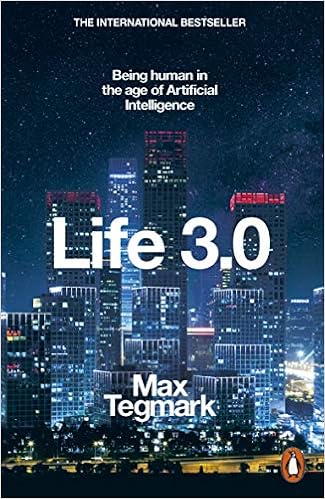
Short Book Review: Life 3.0 by Max Tagmark

Image result for max tegmark life
Review by Dr. Omar Javaid

Max Tagmark's book Life 3.0 does a good job on one end and a very bad job on the other. The good job which this book does is to give a expansive overview of the concept of Artificial Intelligence, what possibilities its development holds, how it will effect humanity etc.

However, when it comes to defining what life really is, and should we really call artificial intelligence as an upgraded form of life or not, the books fails miserably.

One of the greatest mysteries of life is human consciousness, a sense of self-awareness, and an ability of subjectively experience the moments of life. Without making an effort to define human consciousness, any definition of life is ought to be incomplete.

Yuval Noah Harai in his Homo Deus does a much fairer job in this context. Robert Lanza's book Biocentrism is perhaps the best work on the human consciousness so far.

Tagmark on the other hand in Life 3.0 barely touches the subject of human consciousness. The last chapter on the book offers a meager literature review on the subject, where Tagmark accepts the inability of scientists in general to explain or describe the ultimate source of subjective experience within human mind.

If that's the case, then normative justification for the AI to be the next step in the evolution of life itself, is nothing short of comical. After going through Lanza's Biocentrism, and Harari's Home Deus, Tagmark work on the subject seems mediocre at best.

So if someone is interested in reading about Artificial Intelligence alone, while excluding the normative justifications for AI, then the book will serve the purpose well. However, if you are interested to understand life itself, then please avoid this book. 

Wednesday, June 19, 2019

Rouge Bureaucracies

Dr. Omar Javaid

Image result for bureaucratic machineFrancis Fukuyama suggests that state bureaucracies emerged to cope the threat faced by empires from external invaders. After agricultural revolution, when human society produced surplus for the first time, threats of invasion from outsiders became a problem, and as an antidote an army had to be maintained to thwart the invaders. During earlier days, every member of a tribe was trained to fight, but when tribes grew in size and turned into empires, professional armies were created to readily fight back the invaders or initiate an advance into enemy territory. That was a pre-requisite for survival of an empire, particularly when the empire was in competition with another empire of comparable size. To finance the army, a system of taxation was typically employed. The public was convinced to pay a tax in exchange of the security from foreign invaders. To manage the tax collection and utilize it to maintain an army, a bureaucratic system was created, which would manage resources without nepotism and whose managers would serve the empire above any personal agenda. Thwarting nepotism was in fact core principle behind erecting bureaucracies. At first bureaucracies managed the resources necessary to maintain an army, and later law enforcement. Today the system is employed by every state to maintain an entire array of public institutions including system of education, health care, railway, airports, law enforcement, garbage collection, supply of utilities, maintenance of city infrastructure etc.